Mold Remediation for Philadelphia Homes
Request an estimate for your home
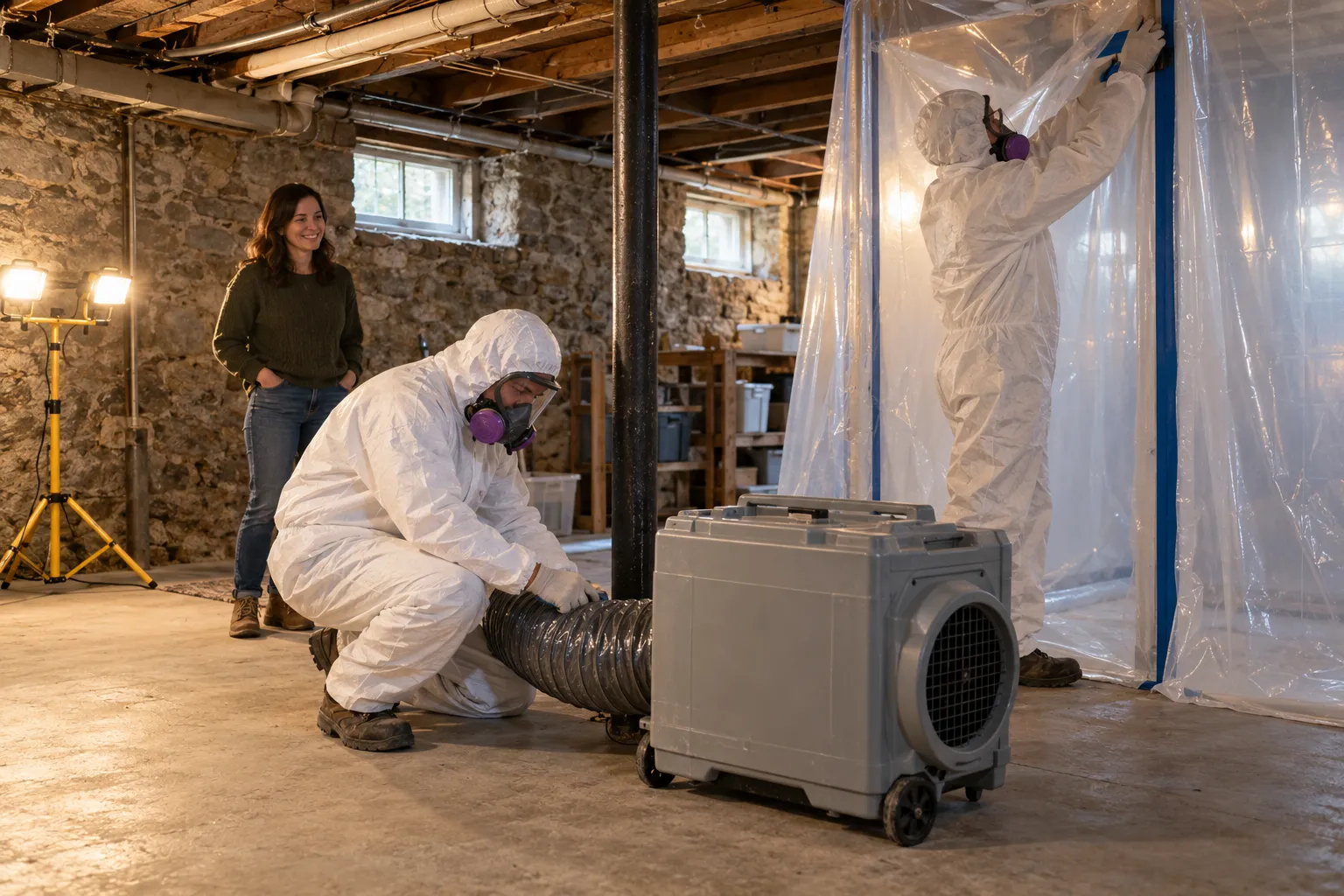
Mold remediation means stopping the moisture, sealing off the work area, removing the growth, and drying the space so it stays clean. It is more than a bleach bottle and a scrub brush. Pros use containment, HEPA air filtration, and moisture meters to keep spores from spreading through the house.
Leastonto Mold Help is a referral service. We do not do the work. We help homeowners in Philadelphia and the Philadelphia area sort out which jobs they can handle and which need pro gear. Then we connect them with independent providers in our network who inspect, test, and remove mold. Request an estimate to talk through your situation, with no obligation to hire anyone.
Found Mold? Stop and Look First
You spot a dark patch on a wall, or a musty smell hits you in the basement. Pause. Do not scrub it dry or point a fan at it. That can throw spores into the air and send them through the house.
Take photos. Write down where it is and when you first noticed it. Close the door to that room if you can. A provider in our network can look at it and tell you what you are dealing with.
Fix the Water First
Mold needs moisture. If the water stays, the mold comes back, no matter how well you clean. So hunt for the source: a drip under a sink, a cracked foundation wall, a clogged gutter, a bad roof edge, or damp air with nowhere to go. Older homes with stone or block foundations often seep after heavy rain or snowmelt.
You can handle the small fixes. Clear the gutters. Extend the downspouts. Seal a loose bathroom fan duct. Tighten a leaky fitting. A burst pipe, a wet wall cavity, or groundwater pushing through the floor is bigger. Know where to stop and call a plumber or a pro.
Where You Can Help, Where to Stop
A small spot on a hard, nonporous surface, like a tile grout line, is often a homeowner job. Wear an N95 respirator, gloves, and goggles. Wipe with detergent and water, then dry it completely.
Bring in a pro when any of these is true:
- The patch is bigger than about ten square feet
- It sits on drywall, insulation, carpet, or wood framing
- It came back after you cleaned it
- Someone in the home has asthma, allergies, or a weak immune system
- You smell mold but cannot find it
Porous materials hold mold roots deep inside. Wiping the top only hides the problem.
Why Mold Spreads While You Wait
Mold can start growing on damp material within a couple of days. It feeds on drywall paper, wood, and dust. A patch behind a wall keeps growing where you cannot see it. Spores ride along on air currents, through vents, and on your clothes.
The longer it sits, the more material may have to come out. That can mean a bigger job and a bigger bill.
What Remediation Involves
Residential mold removal follows a set order. Providers differ, but the basics look like this:
- Inspect the space and map the damp areas
- Set up containment around the work zone
- Run air scrubbers with HEPA filters
- Tear out materials that cannot be saved, like soaked drywall or carpet pad
- HEPA vacuum and scrub salvageable surfaces such as studs and joists
- Dry everything fully
- Check the results, then rebuild what was removed
If you want certified mold testing, a provider can explain when it makes sense before the work, after it, or both.
Why Containment Matters
Plastic sheeting, tape, and a zip door seal off the work area. Fans pull air out through filters, so the air pressure inside stays lower than outside. Dust and spores stay put instead of drifting into bedrooms or the furnace.
Skipping this step is how a small job becomes a whole-house job. It is also why a box fan and a spray bottle fall short.
Cold Seasons and Damp Basements
Winters here are cold and snowy. Warm indoor air meets cold block and stone walls and leaves moisture behind. Freeze-thaw cycles widen cracks in foundations. Spring snowmelt pushes water toward the basement. Coastal storms can drive rain into old siding and roof edges.
Plan around the calendar. In fall, clear gutters, check the grading, and test your sump pump. In winter, watch for condensation on windows and in the attic. In spring, check the basement after the thaw. Cold weather does not kill mold. It only pauses it.
Insurance and Paperwork
Some policies may cover sudden damage, like a burst pipe. Slow leaks and long-term seepage are often excluded. Check your policy and ask your insurer before you start.
Providers can often help document damage for a claim. Keep your photos, notes, and receipts. Do not toss damaged material until it has been photographed or shown to an adjuster.
Picking a Provider
Ask for a written scope and a written quote. Ask how they handle containment, what they remove versus clean, and how they check the finished work. Ask whether the company that tests is separate from the one that removes. That keeps things honest.
Ask for proof of any license or insurance your state requires. Compare more than one quote. Leastonto Mold Help connects you with independent providers. It does not do the work itself.
After the Work Is Done
Keep indoor humidity under about 50 percent. Run a dehumidifier in the basement. Vent bathrooms and dryers outdoors. Fix drips fast.
Check the spot every few weeks through a full season. Ask the provider for a final summary and any clearance results. If a musty smell returns, Request a callback to check provider availability for a recheck.
What's Included
Inspection and Moisture Mapping
A provider finds where the mold is, how far it reaches, and which spots are still damp.
Containment and Air Filtration
Sealed work zones and HEPA air scrubbers keep spores out of the rest of your home.
Removal and Cleaning
Ruined drywall and carpet come out. Studs and hard surfaces get vacuumed and scrubbed.
Drying and Final Check
Surfaces are dried fully, then checked so the area is ready for repairs.
Typical Mold Remediation Costs
Prices vary a lot by home, size, and how much material has to come out. These are typical U.S. ranges only. Always get a written quote that spells out exactly what is included.
| Service | Typical range | Notes |
|---|---|---|
| Small area (under 10 sq ft) | $500 – $1,500 | Often one wall or a corner |
| Single room | $1,500 – $4,000 | Depends on drywall removal |
| Full basement | $3,000 – $8,000 | Higher with large or damp footprints |
| Attic mold | $1,500 – $6,000 | Roof ventilation fixes may add cost |
| Mold testing | $300 – $1,000 | Air or surface samples with lab fees |
| Drywall and insulation removal | $1,000 – $3,500 | Rebuild work is often separate |
How It Works
Document What You See
Take photos, note the location, and keep the room closed. Do not disturb or dry-scrub the mold.
Request an Estimate
Tell us about the spot and your home. We point you to a local provider.
Provider Inspects the Home
The provider checks the damage, finds the moisture, and gives you a written quote.
Work and Final Check
Containment, removal, and drying happen, then the area is checked before repairs.
Why Call Leastonto Mold Help
Hands-On Advice
Get plain guidance on what a handy homeowner can safely tackle and where pro gear takes over.
Independent Providers
Providers in our network do the inspection and removal. They are separate local businesses, not Leastonto Mold Help.
Seasonal Awareness
Snowmelt, freeze-thaw, and storm weather shape the timing, so we keep the calendar in view.
No Obligation
Request an estimate, compare your options, and decide on your own schedule.
Other Services
Need mold remediation in Philadelphia?
- Find the water source before anything else
- Inspection and testing options
- Black mold concerns
- No-obligation estimates
Mold Remediation FAQ
Can I remove mold myself or do I need a pro?
Small spots on hard surfaces like tile are often safe to clean yourself with gloves and an N95 mask. Larger patches, mold on drywall or wood, or repeat growth call for a professional provider.
How much does mold remediation cost?
Typical U.S. jobs run from about $500 for a small area to several thousand dollars for a full basement. Costs vary by size and damage, so get a written quote before any work starts.
Does homeowners insurance cover mold removal?
Some policies may cover mold that follows sudden damage, like a burst pipe. Long-term leaks are often excluded. Check your policy, and ask your insurer. Providers can often help document damage for a claim.
Get in touch
Questions about a musty smell, a dark patch or a test result? Reach out and we will connect you with a local provider in our network. No obligation.
No obligation